How to Grow Aluminum Plants (Watermelon Pilea) | Gardener’s Path
Pilea cadierei
The aluminum plant, Pilea cadierei, is an evergreen herbaceous perennial that grows outdoors in part shade in USDA Hardiness Zones 11 and 12, and indoors in bright indirect sunlight all told locations.
It has a shrub-like, clumping outgrowth drug abuse and is appreciated for having texturally rich foliage that is green with argent markings.
P. cadierei is one of approximately 600 types of non-stinging Pilea species in the Urticaceae, or nettle category that contains Urtica dioica and clearweed.

We link to vendors to serve you bump relevant products. If you buy in from one of our links, we May earn a commission .
In this article, we discourse all you need to know to cultivate a theatrical aluminum houseplant of your own.
Here's what's in store:
What You'll Larn
- Refinement and History
- Propagation
- How to Maturate
- Flourishing Tips
- Care
- Where to Buy out
- Managing Pests and Disease
- Quick Reference Growing Guide
Ready? Net ball's get in gardening mode.
Cultivation and History
Also known as watermelon pilea, the silvery-streaked foliage of P. cadierei resembles the striping happening the peel of the classical summer melon.
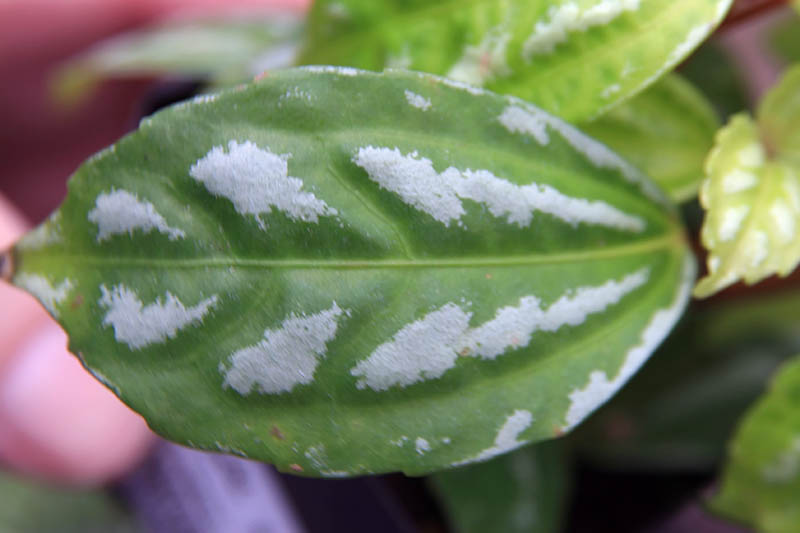
It's an challenging pattern. Betwixt the foliage veins there are raised areas, and the fact that they are highlighted with silver makes them stand out strikingly.
The leaves have serrated margins, and are a cross between elliptical and ovate in shape, arsenic both are pointed, and others are more allantoid.
The leaves feel waxy, and the stems are fleshy, suchlike those of a begonia or succulent species.
The flowers are characterless with a greenish-white color. They produce in cymes, which are flat-flat-top inflorescences, or clusters.
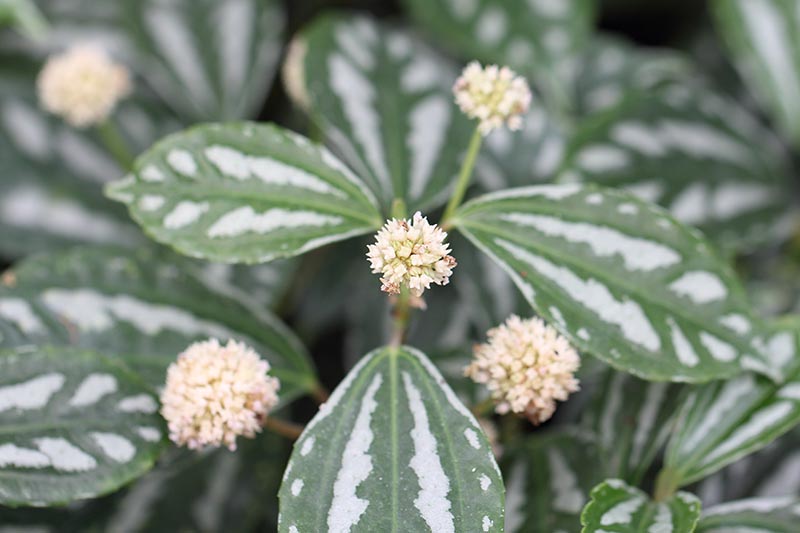
In their natural home ground, blooms appear in spring and summer, but they are seldom seen on houseplants.
With a manageable mature superlative of nine to 12 inches and a spread of sixer to nine inches, this little cutie is fountainhead suited to indoor gardening, especially in small spaces where it can shine as a standalone piece de resistance.
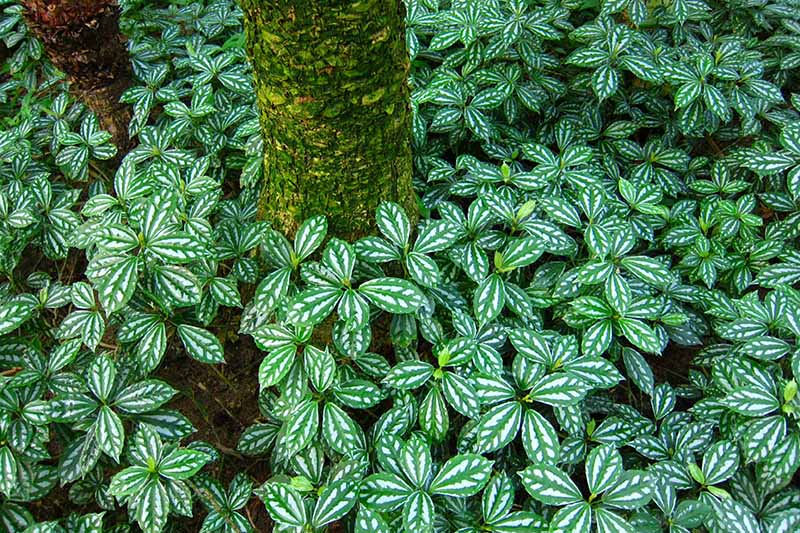
P. cadierei is native to China and Vietnam, where information technology grows as a ground get across over the hobo camp floor, thriving in shade and dappled sun with an teemingness of heat and humidity.
P. cadierei potential made its way west as one of a host of tropical specimens destined for study, cultivation, and introduction to the burgeoning decorative plant market of the early 20th century, when imported palms graced Victorian parlors.
And although it is a relatively short-lived species that is unlikely to final stage more than five years, information technology's so easy to circulate from radica cuttings that you sack enjoy it well into the future.
Let's find out how!
Generation
To start your own watermelon pilea, you'll motivation to take a theme cutting from an existing plant surgery purchase a new one from a nursery that you can transplant to your personal pot as desired.
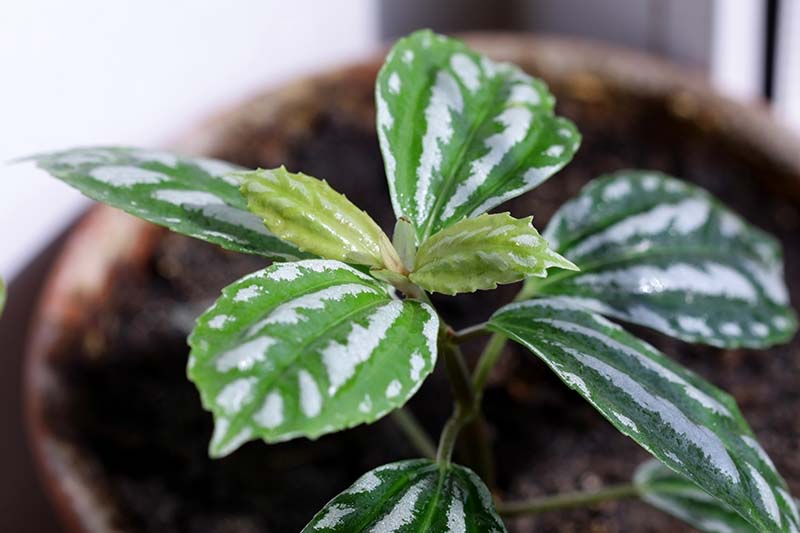
First, let's talk about attractive cuttings and rooting them in either water Beaver State begrime. Then we'll pass on to nursery pots.
From Stem Cuttings
The best time to take cuttings is during the growing season in recoil or summer.
To take a cutting from a stem, pop out at the growing tip and measure down about three inches.
Utilise clean scissors to slew cleanly across the stem about an eighth of an inch below a pair of leaves.
Snip off the lowest leaves so you're left with a distance of bare stem at to the lowest degree two inches drawn-out, with the top leaves intact. There should be none leaves below the surface of the water we'rhenium going to put the stem in.
Select a four- to six-ounce container and hygienize it with a 10 percent bleach solution (incomparable partly bleach to nine parts water), then soundly rinse and dry it.
Place the root word in the container and fill IT with ii inches of water.
Set the container in a location with coruscant indirect sun and a temperature betwixt 60 and 75°F.
Change the body of water all few years to keep it fresh.
You'll see weak egg white roots sprouting from the bottom of the stem in a some weeks.
Once the roots are fewer fragile, in another calendar week Beaver State thusly, it's time to transplant the cutting to potting soil.
Choose an personable, well-exhausting container that can accommodate shaggy dimensions of nine to 12 inches tall and six to nine inches wide.
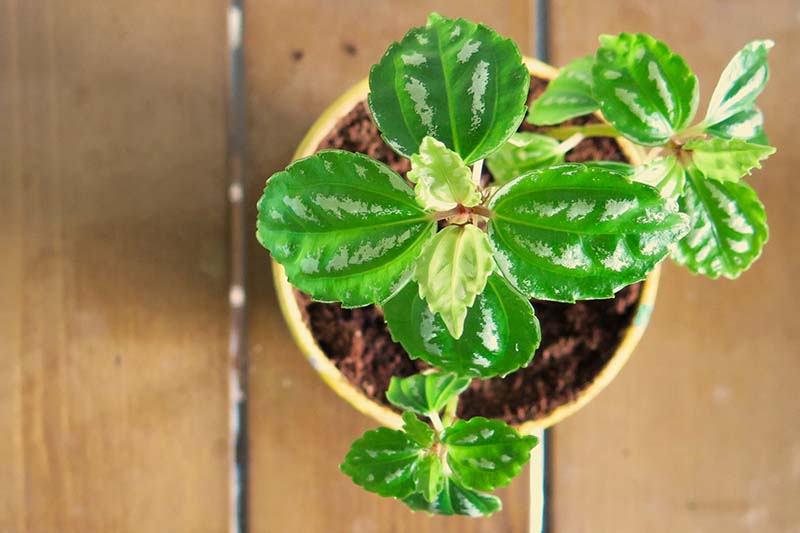
Fill the stack iii living quarters full with an organically rich, loamy potting medium that is light and airy, moisture retentive, and well-draining. A pH of betwixt 5.0 and 6.0 is ideal.
Make a one-inch hole in the soil with a dibble, chopstick, operating theatre like.
Gently insert the rooted stem into the hole and tamping bar the soil around it securely, then weewe easily.
If you wish to start your cutting in soil, you throne dip the cut end in rooting hormone powder, then set the cutting one inch deep in a starter pot filled three quarters full of potting medium.
Maintain even moisture. Newfangled growth is evidence of successful root establishment. At this signal you arse pot it up into a bigger container as discussed below.
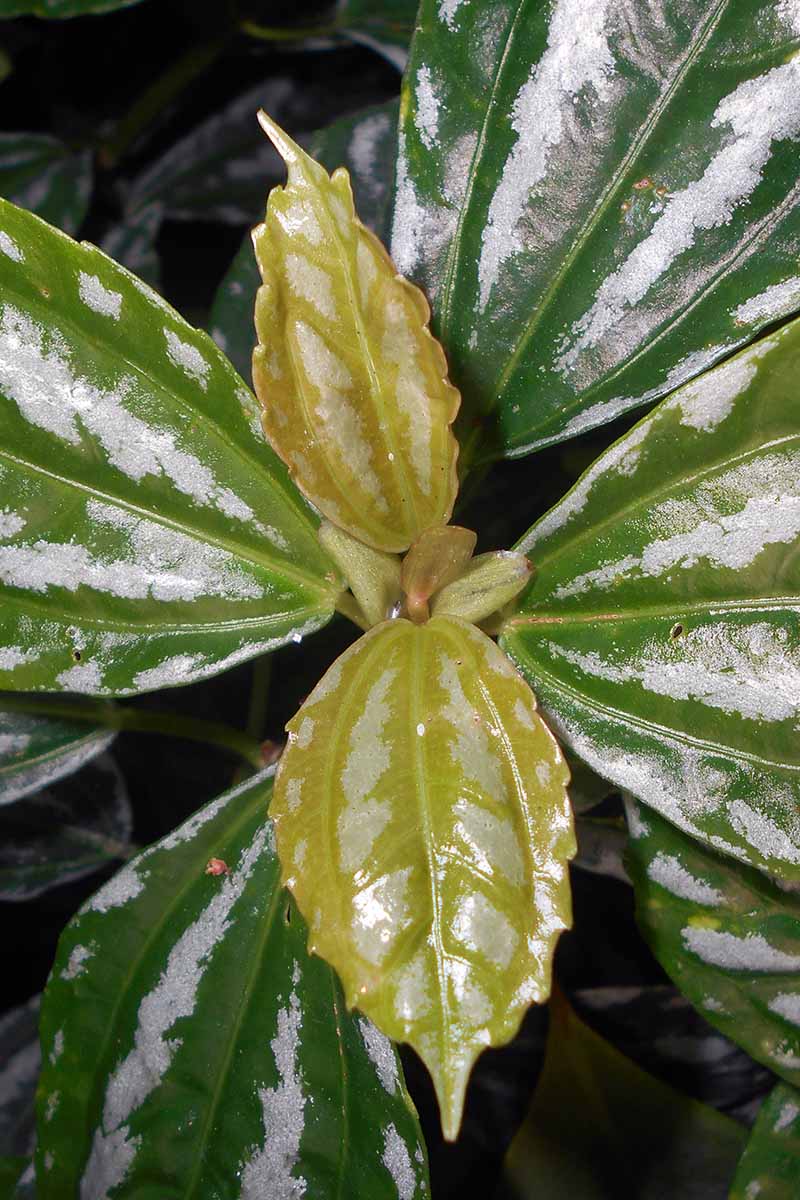
Aft taking a cutting equitable below a leafage node that volition readily root for a fres plant, IT's good to tidy astir the original stem, or else of leaving a distance of scrimpy "stump."
Trim the stem to a point that is one-eighth of an inch above a pair of leaves, to stimulate upward and outward foliar growth.
From a Nursery Pot
When you purchase a abridged specimen, you may wish to repot information technology in a container of your pick. Prefer a container that will accommodate the age dimensions of the plant, and ensure that it has drainage holes in the bottom.
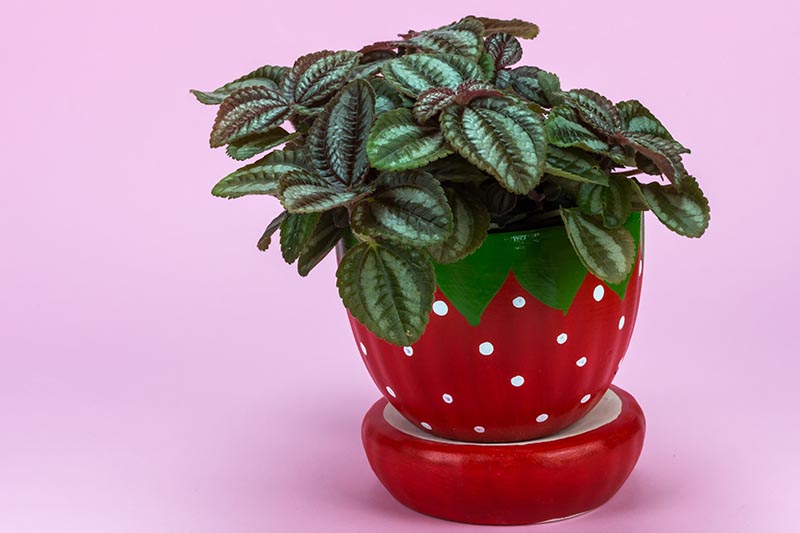
Here's how to transplant from a greenhouse pot:
Gently unpot the plant and tease the ground and roots. If they are tightly coiled, or "root bound," you can snip the last-place roots to loose them and flay them outward to encourage them to circularise out.
Place the entire contents of the fresh pot in the unaccustomed container. Set it so the plant is at the same depth in the new pot as it was in the old.
Fill out with organically well-to-do potting soil A required. Ideally, you should leave one inch of space from the rim of the pot to the land surface to provid watering without overflowing.
Tamp the soil down to secure the plant in the new pot, and water well.
How to Grow
Keep your plant in a room with temperatures between 60 and 75°F, and allow bright indirect light. Direct sunshine, peculiarly through and through a windowpane, can scorch foliage and should be avoided.
Aluminium plants thrive in soil that is kept evenly dampish, but non miry. Water the plant before the bemire in the pot dries out, taking care to avoid wetting the leaves. Leaves that remain wet invite flora maturation.
If your home is particularly dried-up, you may neediness to increase the relative humidness for your aluminum plant.
Here's how to do it with a bed of moist pebbles:
Find a non-rusting genus Pan that is two to tetrad inches deep, and enough pebbles or wits to cover the bottom of it in a single level. Stave off made-up products equally they English hawthorn deteriorate when sanitized.
Sanitise the pan out and pebbles by soaking them in a 10 percent whitener solution for 10 to 15 transactions. Rinse thoroughly and dry-eyed.
Fill the pan with a respective layer of pebbles.
Tote up enough water to the pan to barely cover the pebbles.
Put the potted plant connected top of the pebbles.
At planting time and to each one spring, feast with a well-balanced liquid fertilizer per package instructions. Continue to feed monthly during the growing season to stimulate the production of growing foliage.
In autumn, growth slows down, and a full point of dormancy begins. Reduce watering and set aside fertilizing until the undermentioned springiness.
Take down that if bright tortuous light is unobtainable, a quality grow light is a executable option. Please see our clause on grow lights to choose the best model for you.
Growing Tips
Caring for an aluminum plant is not hard when you remember the favourable:
- Cultivate P. cadierei in a room with a temperature of at the least 60 and no than 75°F.
- Range a bed of wet stones beneath the pot to increase ambient wet for this humidity-loving hot and go along IT wet.
- Fertilize with a well-balanced liquid fertilizer at planting time and monthly throughout the growing season.
- Maintain even moisture by watering in front the bemire completely dries out and reduce lachrymation during the fall and winter.
Sustentation
This is a reasonable amount of maintenance involved in caring for your aluminum plant during the growing season.
You may read that it's a low alimony plant, but you'll need to be diligent about lachrymation as you can't let the soil dry out during the most active growing periods of spring and summer.
During dormancy in fall down and winter growth is suspended and the soil dries out more slowly, at which sentence maintenance is reduced.
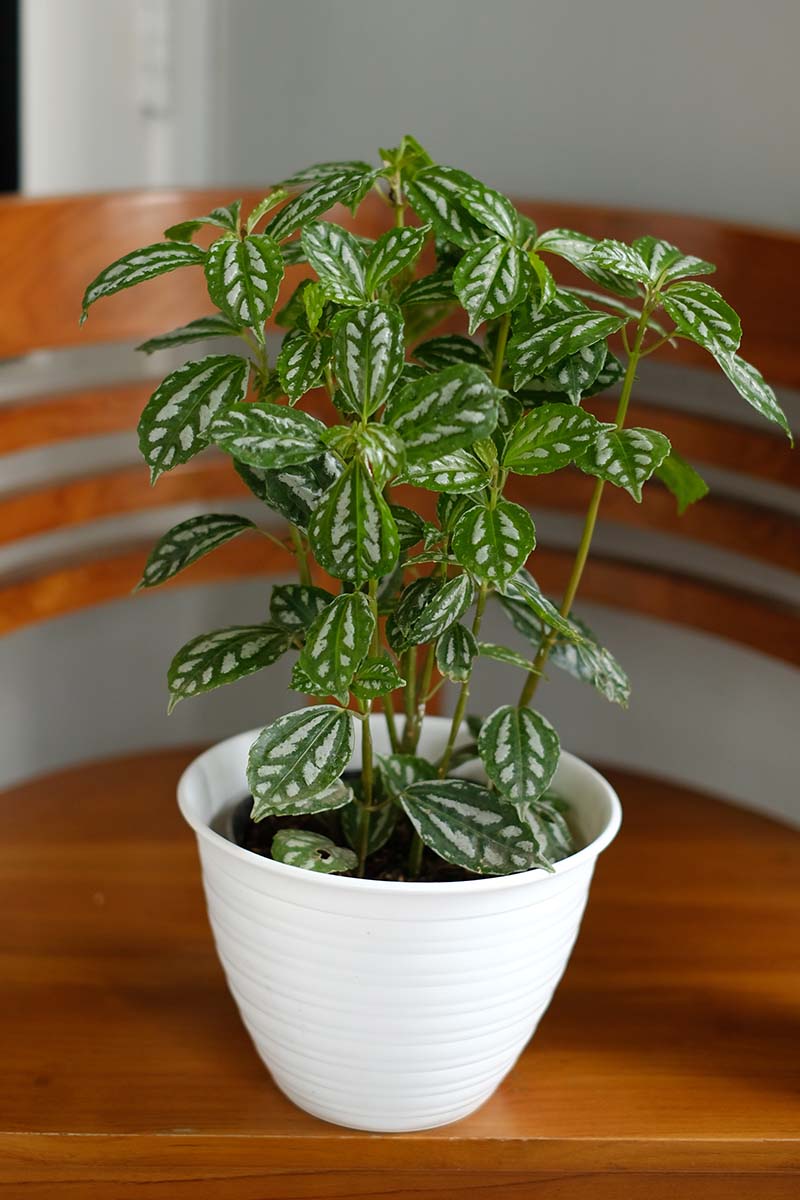
In addition, this is a fast-growing species that requires regular pruning during the growing season to maintain a compact soma. The removal of dead and damaged leaves as advisable arsenic leggy stems optimizes sense modality appeal.
E'er sanitize pruners in a 10 per centum bleach solution (one division bleach to nine parts water) before and after use.
Make cuts good supra a pair of leaves to stimulate upwardl foliar growth. If you are departure to enjoyment the pruned stems as cuttings to propagate new plants, recut them just below a pair of leaves to stimulate root growth below the leaf node.
To encourage bushier increase, you buns wash your hands and utilization your thumb and power fingernails to periodically nip off the top inch operating theater two of fresh jump and summertime growth.
Maintain justified moisture past watering ahead the soil completely dries unfashionable. Take off care to water the soil, not the leaves, As wet leaves are prone to diseases and rotting.
And finally, remember that P. cadierei is a tropical specimen that craves moisture. If the growing environment is besides dry out, it may not thrive.
Instead of misting the leaves, as unmatchable would logically think to DO, use the goat god of pebbles discussed supra.
Add water to the pebbles as required to bread and butter them barely covered. Periodically, allege every month, turn over the pan and pebbles a thorough sanitizing with a 10 percent bleach resolution ahead adding fresh water.
Where to Buy
Information technology's easy to fall in love with a Citrullus vulgaris pilea when you pop with a quality product that has been well-cared for during its nursery years.
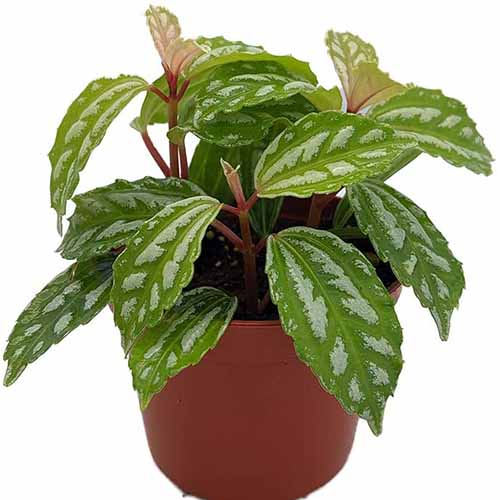
Al Plant
This little darling from Hirt's Gardens is ready for its new plant parent. Remember to support the temperature above 60 and below 75°F and supply bright hearsay calorie-free.
For best results, provide even moisture, neither oversaturating nor rental the soil totally dry out.
When you prune to rejuvenate and uphold a bushy shape, your revolutionary arrival will be quite happy.
Find aluminium plants immediately from Hirt's Gardens via Amazon in 2.5-inch pots.
In addition to full-size of it plants, there is a dwarf variety. P. cadierei 'Minima', with an particularly diminutive height of only eight to 10 inches. IT has the same plushy green and silver leaf markings, and cultural requirements.
Managing Pests and Disease
With bright, backhanded temperate, moderate watering, rejuvenating pruning, and unit of time impregnation, your watermelon pilea will enjoy good health and be able to fend unsatisfactory many ailments.
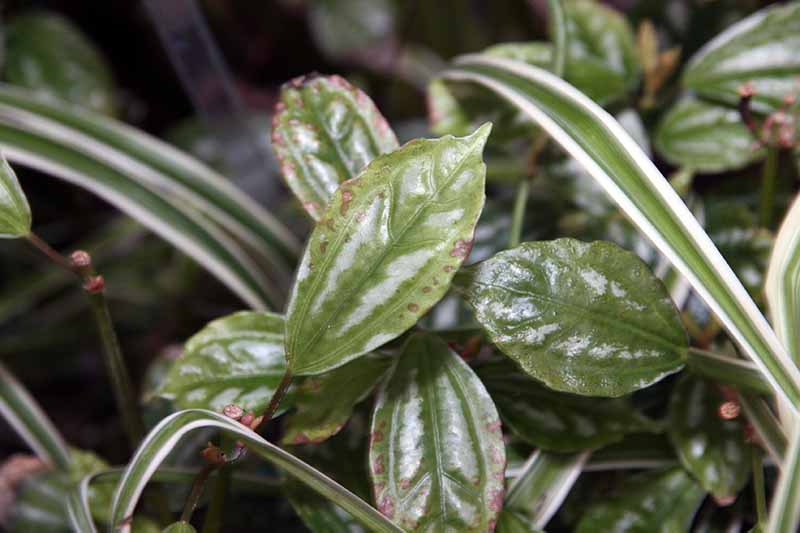
However, houseplants in suite that are too baking hot and thirsty English hawthorn succumb to pests the like:
- Aphids
- Mealybugs
- Spider Mites
Caught early, a firm dousing with the kitchen spray followed past a treatment with organic insecticidal arishth oil should do the antic.
Getting obviate these pests is a moldiness, as they are carriers of plant diseases, and their sap-sucking can cause extensive foliar damage.
You may live wondering wherefore the aphid, an outdoor gadfly, would touch an indoor plant.
In November 2018, the Florida Department of Husbandry and Consumer Services Division of Flora Industry issued a Pest Watchful that warned that the Pilea aphid, Myzus fataunae, had been detected in the Western Hemisphere.
Native to Japan and Korea, this aphid is more likely to affect foliage cultivated outdoors.
However, it bears noting that the potential exists for it to embody present happening a set purchased for indoor cultivation. And without some outdoor predators like birds to gobble it up, it has the potential to wreak havoc.
When a pest infestation can't Be controlled, as a last resort, you can cut complete the stems to the crown and discard them in the trash. With a nourishing dose of liquifiable houseplant fertilizer and regular watering, the stems May regrow.
Per the experts at Mid-Florida Research and Education Center of the University of Florida Institute of Flood and Rural Sciences, the followers diseases are common to P. cadierei:
- Anthracnose (Colletotrichum spp.)
- Myrothecium Leafage Spot (Myrothecium roridum)
- Pythium Root Rot (Pythium spp.)
- Rhizoctonia Aerial Blight (Rhizoctonia solani)
- Xanthomonas Leaf Spy (Genus Xanthomonas campestris)
- Southern blight (Genus Sclerotium rolfsii)
The first, Anthracnose, is bacterial and the others are fungal. Symptoms can be hard to recognise, and most import disaster. Only Pythium rootage rot and Rhizoctonia ethereal plague may respond to fungicidal discourse.
The bottom line is this:
When plants are too violent and sec, they may succumb to sap-sucking pests.
And when the foliage stays wet, it becomes a facts of life ground for bacteria and fungi, most of which cause diseases that are are incurable.
It's important to be proactive!
Select a healthy specimen and supply a mild placement with adequate moisture. Avert both low-level- and overwatering, and ever water the soil, non the leaves, to prevent moisture buildup.
Nimble Reference Growing Channelis
| Plant Type: | Nonwoody evergreen perennial | Leaf Colouring material: | Green with ash grey splashes |
| Domestic to: | China and Vietnam | Maintenance: | Moderate |
| Robustness (USDA Zone): | 11-12 | Water Needs: | Moderate |
| Salad days Clip: | Summer | Soil Case: | Organically full-bodied loam |
| Exposure: | Bright, circuitous bright | Soil pH: | 5.0-6.0 |
| Planting Depth: | 1 inch, or same as container depth | Soil Drainage: | Well-exhausting |
| Height: | 9-12 inches | Order: | Order Rosales |
| Spread: | 6-9 inches | Family: | Urticaceae |
| Growth Rate: | Fast | Genus: | Pilea |
| Common Pests and Disease: | Aphids, mealybugs, spider mites; Anthracnose, myrothecium leaf touch, Pythium root hogwas, Rhizoctonia aerial blight, Xanthomonas flip spot | Species: | Cadierei |
A Pleasant Little Companion
You're going to love not only the attractive form of watermelon pilea, but the versatility as well. It makes an gracious improver to your houseplant collection, and a enceinte home part companion as well.
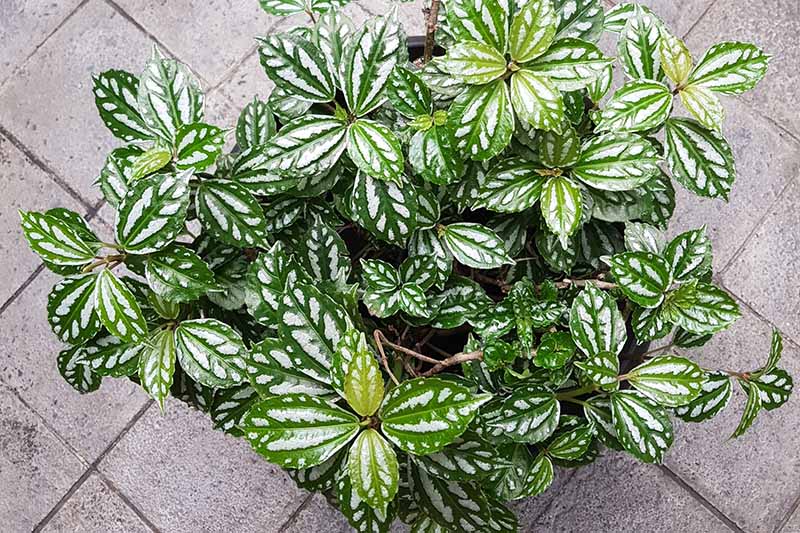
With organically rich, well-draining potting medium, a warm room, bright indirect light, monthly feedings, and accordant moisture, you're well on your room to winner.
Theatrical until no compact, P. cadierei is easily transported to the sink, where it can drain neatly after a thirst-quenching tearing.
There's no need for large supplies or great strength. It's not going to need a wheeled cart someday like a mature ponytail thenar, or Swiss cheese plant.
And if it does, we want to be the first to hear about the phenomenon!
Don't you think IT's time to add P. cadierei to the to-do list in your accessible garden planner?
Do you grow your own watermelon Pilea at home or lic? Tell us about your little plant pal in the comments plane section below.
If you enjoyed reading about growing this tropical species indoors, we recommend the pursuit houseplant guides next:
- How to Grow and Care for Petition Plants
- How to Grow and Care for Dayflower
- How to Grow and Care for Hoya Houseplants
https://gardenerspath.com/plants/houseplants/grow-aluminum-plant/
Source: https://gardenerspath.com/plants/houseplants/grow-aluminum-plant/
0 Response to "How to Grow Aluminum Plants (Watermelon Pilea) | Gardener’s Path"
Post a Comment